Hebrew Language
Learning Hebrew: Tips and Flashcard Tricks for Kids
The Hebrew language is a critical cultural indicator, but childhood exposure is decreasing in our increasingly assimilated and secular world. Here are some things to keep in mind if you are teaching kids or learning for the first time.
My Hebrew teacher was highly technical, strict, and astonishingly patient. His name was Ira Silverman, and he was raised in an Orthodox community. He was able to block all traces of his Ashkenazi roots while teaching in a Modern Israeli (Sephardic) syntax. I’m grateful beyond words for all the hours we spent together over several years.
Fast-forward a few decades, and now it’s time to teach my three-year-old son. I took the natural first step and started shopping for flashcards on Amazon. That’s when I realized a fundamental aspect of Ira’s approach to teaching: Do not, for any reason, use transliteration.
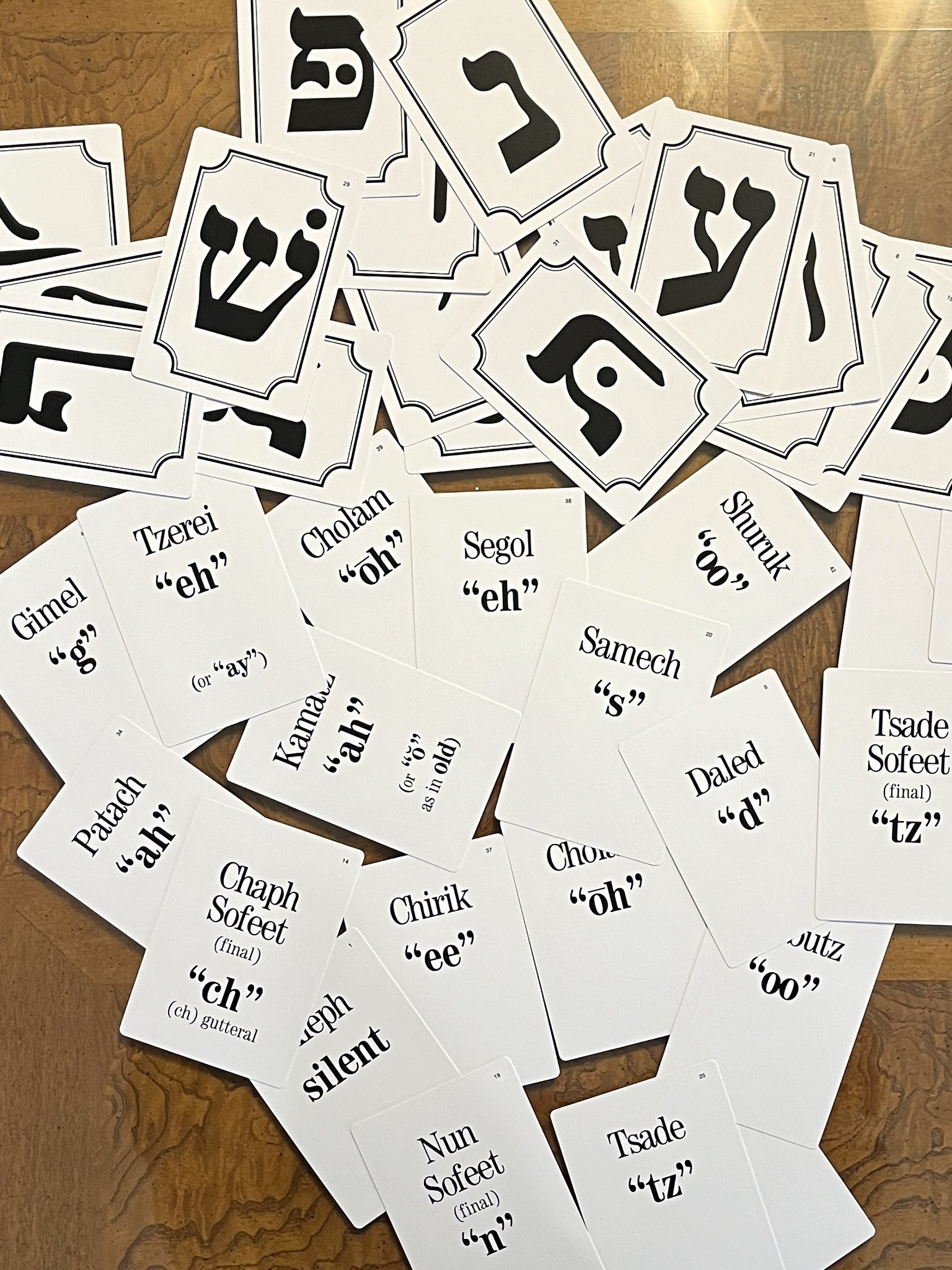
Transliteration is simply more trouble than it’s worth. It’s easier to learn and read the sounds of Hebrew letters and vowels than to try applying English grammar rules to transliterated words. If you have no prior Hebrew knowledge, good luck sounding out letter and vowel transliterations like “tzerei,” “samech,” and “lamed.” English rules require “lamed” to be pronounced “laymd” (rhyming with “named”) since a vowel followed by one consonant and then another vowel makes the first vowel long. The correct Hebrew pronunciation for the word is actually “la-med.”
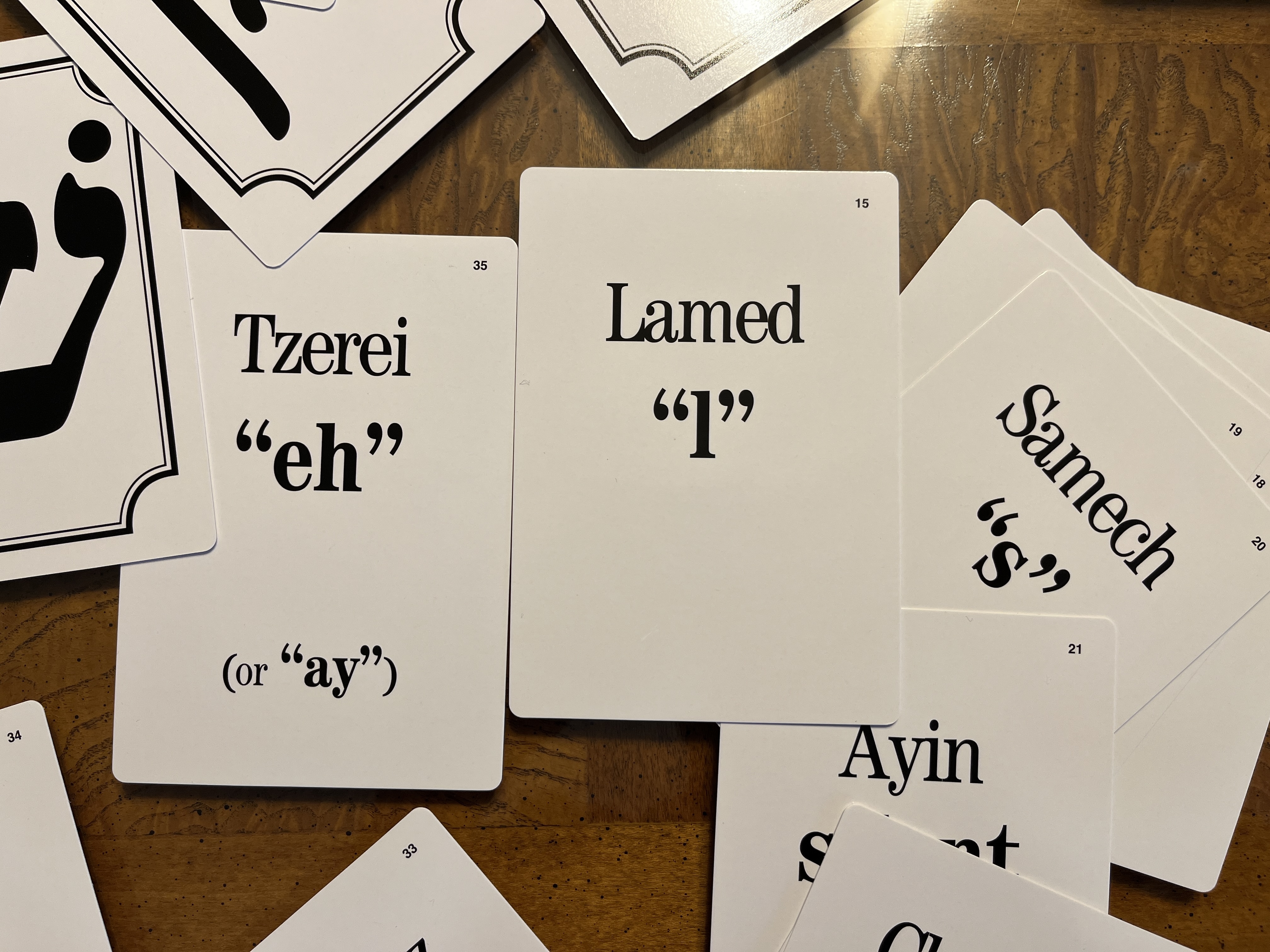
If that wasn’t annoying enough, transliteration adds the further complexity of forced dialect. It’s common to see Ashkenazi instead of Sephardic pronunciations on flashcards and other learning material. These are some of the dialect variations you’ll find for letters and vowels: beis vs. bet, sov vs. tav, kuf vs. qof, vov vs. vav, and komets vs. kamatz.
The use of written acrophonic names on flashcards avoids transliteration and dialect problems altogether. Acrophonic names in Hebrew are full written names that match the pronunciation of letters and vowels. The acrophonic name for א is אָלֶף and ג is גִּימֶל, unlike English where A is A and G is G. The acrophonic names in Hebrew allow for perfect pronunciation of the letter names after learning the simple sounds of each letter and vowel. It’s a linguistic quirk due to Hebrew having an acrophonic Semitic abjad origin.
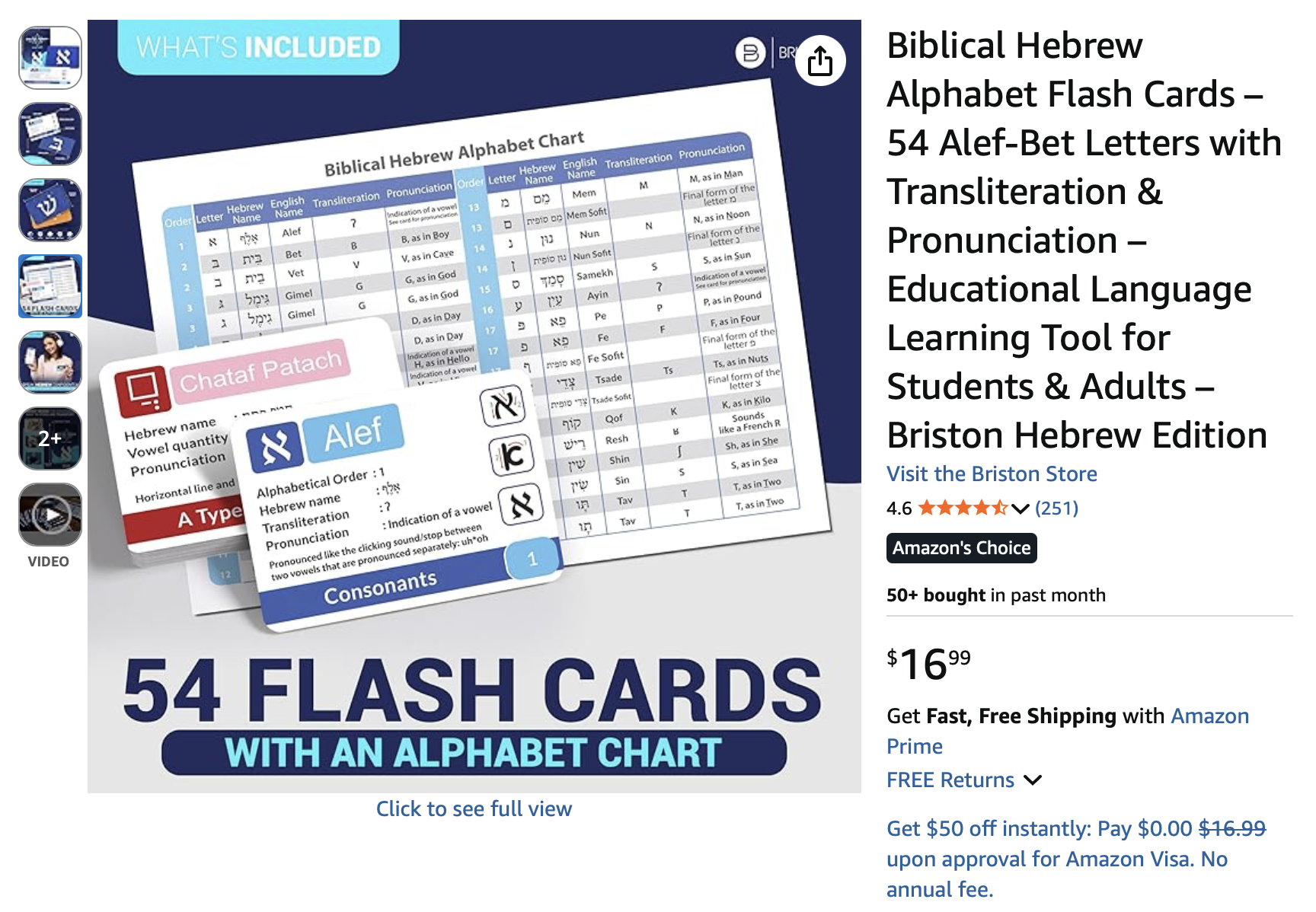
Most flashcards available online do not have acrophonic names. The hard-to-find ones that do, like Briston’s Biblical Hebrew cards, are cluttered with too much superfluous information for basic use with children. There are also some overpriced print-it-yourself JPG or PDF files with them that you can find on sites like etsy.com and teacherspayteachers.com. Then, there’s the option to take matters into your own hands.
JET Aleph-Bet flashcards (available on Amazon) are some of the most common and basic with a high-quality feel. They have the standard confusing transliterations, but they are Sephardic-based. The lack of acrophonic names can be rectified with a hands-on learning adventure with your child. Print the names out on paper, cut them out, and tape them onto the flashcards.
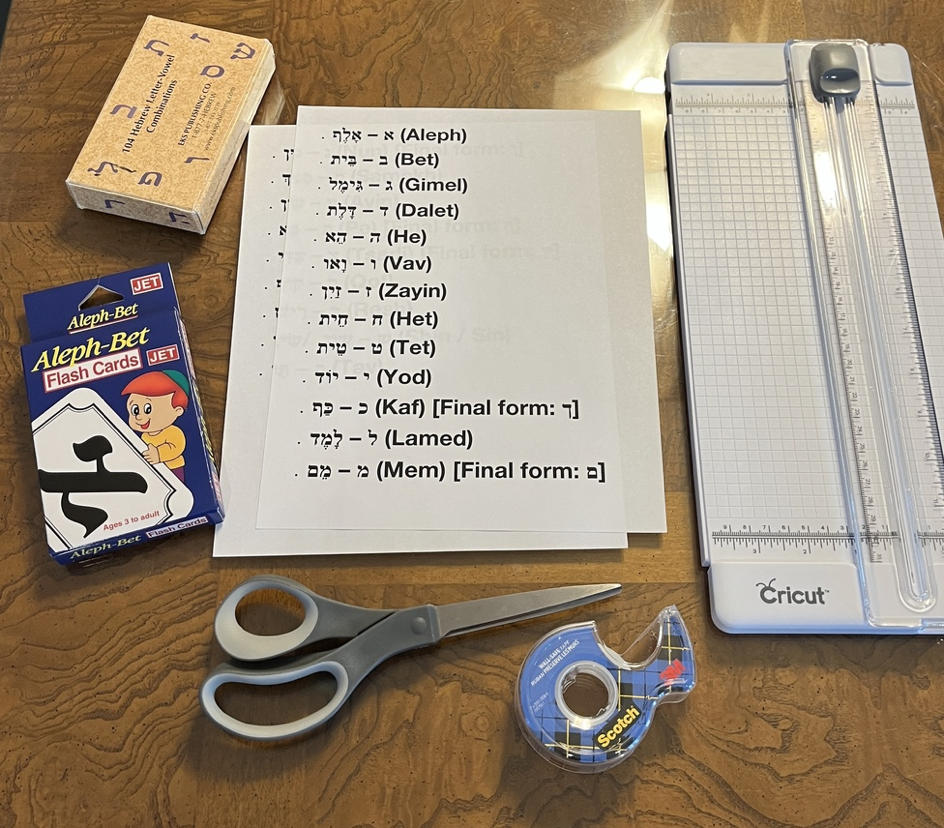
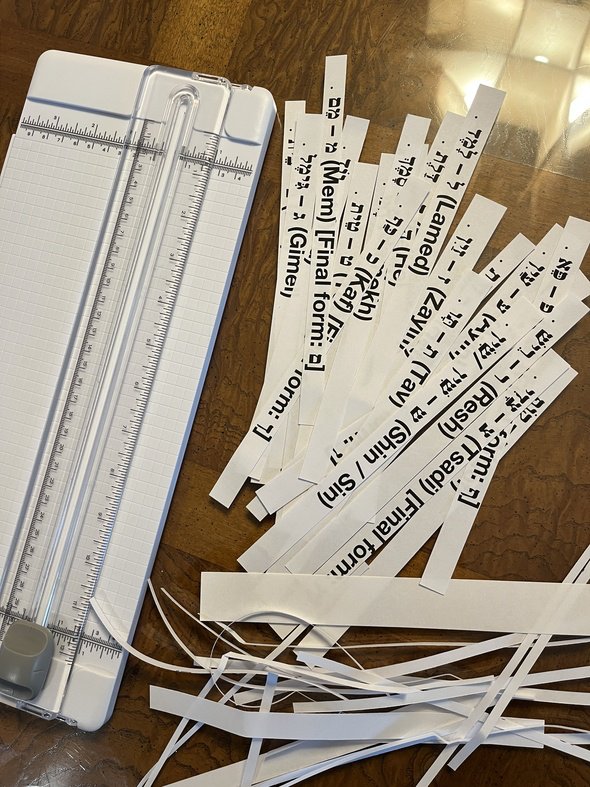
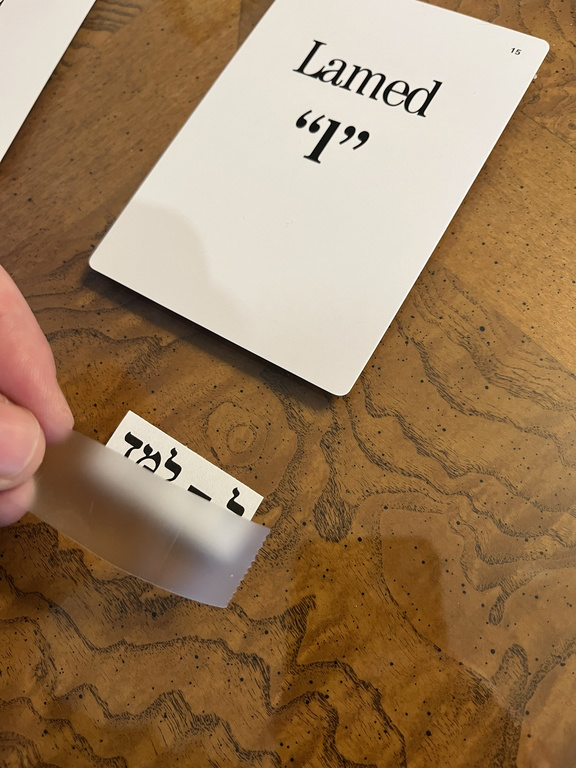
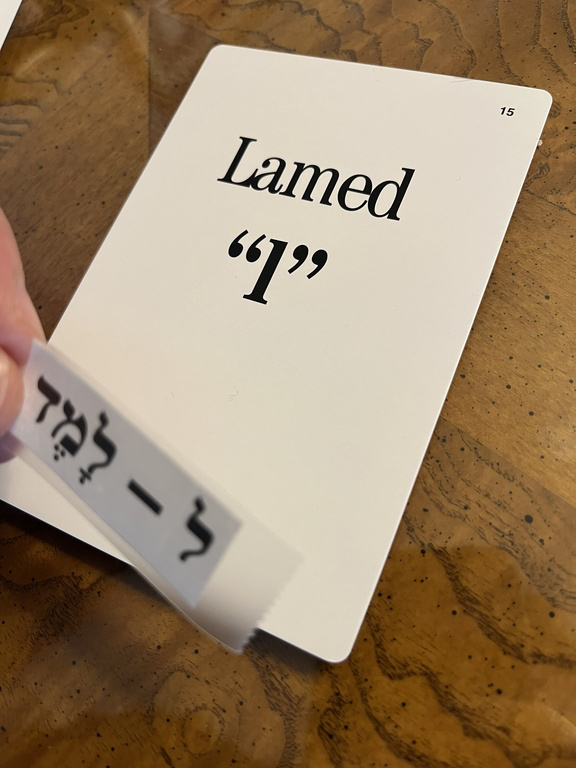
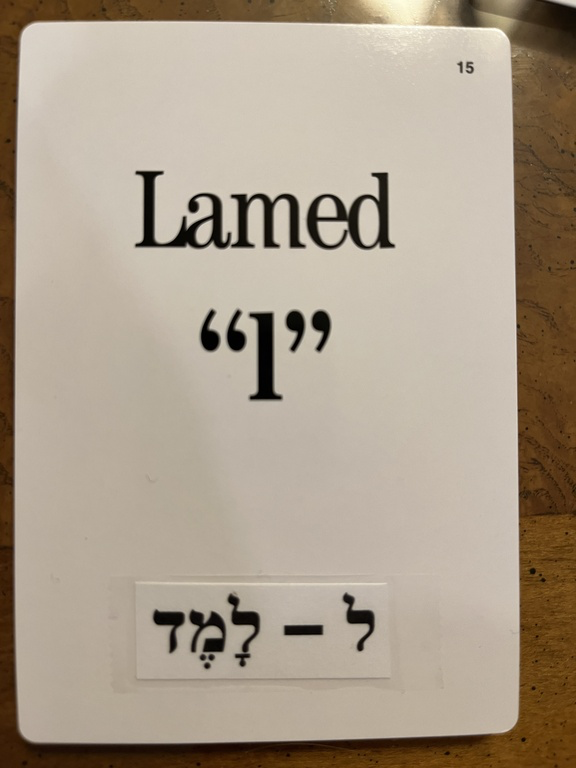
Your child will remember the special effort to add the acrophonic names and achieve perfect pronunciation with them. They might even help you out if you’re a little rusty on all those vowel names. And there’s always joy to be found in Hebrew-themed arts and crafts.
Hebrew letters and vowels with their acrophonic names
Separated by commas for easy copying and pasting:
א - אָלֶף, ב - בֵּית, ג - גִּימֶל, ד - דָּלֶת, ה - הֵא, ו - וָו, ז - זַיִן, ח - חֵית, ט - טֵית, י - יוֹד, כ - כַּף, ל - לָמֶד, מ - מֵם, נ - נוּן, ס - סָמֶךְ, ע - עַיִן, פ - פֵּא, צ - צָדִי, ק - קוֹף, ר - רֵישׁ, ש - שִׁין, ת - תָּו, ַ - פַּתַח, ָ - קָמֶץ, ֵ - צֵירֵי, ֶ - סֶגּוֹל, ִ - חִירִיק, ֹ - חוֹלָם, ֻ - קֻבּוּץ, ְ - שְׁוָא, ֲ - חֲטַף פַּתַח, ֳ - חֲטַף קָמֶץ, ֱ - חֲטַף סֶגּוֹל